
Madeira, la lezione dell’isola
L’atterraggio sul mare
C’è un istante, poco prima di planare su Madeira, in cui l’aereo sembra trattenere il respiro. Sotto l’ala a un certo punto non c’è più terra ma soltanto l’oceano, e la pista compare poi all’improvviso come una mensola sospesa nel vuoto: un nastro d’asfalto che non poggia sull’isola, ma si protende sopra l’Atlantico, retto da centottanta piloni di cemento alti quanto un palazzo di venti piani. Chi arriva qui per la prima volta in genere non lo sa ancora, ma sta per vivere uno degli avvicinamenti più difficili e temuti del pianeta.
Le ragioni di quella fama sono molteplici. La prima è il vento. L’isola sta piantata in mezzo all’Atlantico, cinquecento chilometri a nord-ovest del Marocco, geograficamente più vicina all’Africa che al Portogallo cui appartiene; e le correnti oceaniche la investono senza incontrare alcun ostacolo. La seconda ragione sono le montagne: Madeira è una groppa vulcanica che si solleva ripida dall’acqua, e quando l’aria dell’oceano sbatte contro quelle pareti si arriccia in turbolenze imprevedibili, raffiche trasversali che cambiano direzione nel giro di pochi secondi. La terza ragione è la pista stessa. In origine misurava appena milleseicento metri; nel 2000 fu allungata fino a quasi duemilaottocento costruendo, dove la costa finiva, un viadotto proteso sul mare – un’opera così ardita da essere insignita di un prestigioso premio internazionale nel campo dell’ingegneria strutturale. Solo i piloti con un addestramento speciale possono atterrare qui; e ancora oggi capita che una raffica li costringa a riprendere quota e a ripresentarsi, mentre i passeggeri stringono i braccioli e qualcuno, dicono, ritrova la fede in meno di novanta secondi.
E poi c’è il nome. Dal 2017 lo scalo si chiama Aeroporto Internazionale Cristiano Ronaldo, dedicato al figlio più celebre dell’isola, l’uomo che ha fatto conoscere Madeira a chi non l’aveva mai cercata su una carta geografica. È una di quelle curiosità che dicono molto di un luogo: il campione cresciuto in un quartiere povero di Funchal non ha mai reciso il legame con la sua terra. La sua generosità è fatta soprattutto di gesti rivolti alla salute e all’infanzia – fondi per il centro oncologico che curò sua madre, reparti d’ospedale e attrezzature mediche, l’impegno come ambasciatore di organizzazioni dedicate ai bambini di tutto il mondo. Così l’isola che parte all’insegna del calcio si rivela, già dal cartello dell’aeroporto, un luogo in cui il successo individuale torna sotto forma di cura collettiva. Un buon presagio, viene da pensare, per chi arriva proprio per parlare di benessere delle persone.

Funchal, l’anfiteatro sull’oceano
Funchal, la capitale dove vive circa un terzo dell’isola, ha la forma di un anfiteatro naturale: si arrampica su per le colline a partire dal porto, e le sue case dai tetti color mattone sembrano gradinate disposte attorno al palcoscenico dell’oceano. Vista così, dall’alto, è una città verticale, e non a caso una funivia parte dalla zona del porto per portare in cima chi non se la sente di affrontare i vicoli in salita; salendo, i giardini e le stradine acciottolate del centro lasciano gradualmente il posto a ripide rampe che si inerpicano verso la montagna. In basso, lungo il mare, attraccano le navi da crociera dove un tempo facevano scalo i transatlantici; i marciapiedi sono lastricati di basalto bianco e nero, l’architettura ha l’eleganza un po’ svagata delle città di mare che hanno visto passare molte storie.
È una città che ha l’abitudine di cambiare mestiere senza buttare via nulla. Le fortificazioni erette contro i pirati sono diventate musei; gli antichi carretti di vimini, un tempo mezzo pratico per trasportare i prodotti agricoli a valle, sono oggi una discesa turistica che fa ridere e un po’ tremare. E anche la malinconia ha lasciato il segno. Nell’Ottocento Funchal era una rinomata stazione di cura: si credeva che l’aria pura dell’isola guarisse certe malattie, e una processione di nobili europei venne a respirarla. Tra loro l’imperatrice Elisabetta d’Austria, la celebre Sissi, a cui la città ha dedicato una statua. Più in alto, nel santuario di Nossa Senhora do Monte, riposa l’ultimo imperatore d’Austria-Ungheria, Carlo I, qui esiliato dopo la Grande Guerra e morto di polmonite nel 1922 in ristrettezze economiche: beatificato nel 2004, la sua tomba è ancora meta di pellegrinaggi da ogni parte del mondo. Eppure questa città di esuli e convalescenti è anche capace di gioia clamorosa: i fuochi d’artificio di Capodanno, che illuminano il porto a trecentosessanta gradi, sono entrati nel Guinness dei primati come uno dei più grandi del pianeta.

La lezione: imparare non ha età
Ma la ragione di questo viaggio non era il paesaggio. Proprio qui, nel cuore di Funchal, si è vissuta una di quelle esperienze che ti restano addosso. Come membri della Fondazione Giuseppe Levi Pelloni di Roma abbiamo preso parte al secondo incontro del progetto europeo «Enhancing Cognitive Skills and Social Well-Being through English Learning for Seniors» — rafforzare le capacità cognitive e il benessere sociale delle persone anziane attraverso l’apprendimento dell’inglese — finanziato dall’Unione Europea nell’ambito di Erasmus+. L’iniziativa intreccia tre Paesi e altrettante realtà: la polacca Fundacja EDUNET di Rzeszów, capofila del progetto, guidata da Tomasz Stadnik; la Fondazione Giuseppe Levi Pelloni per l’Italia; e la portoghese Centro Cultural e Desportivo de São José, padrona di casa. A Madeira la squadra italiana, molto affiatata, era guidata dal presidente Pino Pelloni e comprendeva la vicepresidente Paola Sonnino, chi scrive (responsabile del sito e del progetto ebook per la parte italiana), Ilaria Pisciottani (autrice delle foto che illustrano questo testo), Ute Geremias ed Eleonora Rosati.

L’incontro si è svolto nelle aule del centro portoghese, ospiti dell’associazione di São José, e per alcuni giorni l’inglese ha smesso di essere una materia per diventare un gioco di squadra. Gli anziani hanno lavorato con metodi di apprendimento attivo: esercizi per sciogliere insieme la lingua e la timidezza, materiali digitali, giochi linguistici, piccole scenette da recitare e, soprattutto, attività costruite attorno alla cultura e alle tradizioni dei tre Paesi. A fare da spina dorsale c’era l’e-book realizzato dal progetto, una sorta di atlante condiviso che raccoglie geografia, storia, usanze e patrimonio culturale di Polonia, Italia e Madeira: un libro che cresce mentre lo si usa, e che è destinato a restare anche quando le valigie saranno disfatte.
La parte più viva, però, non stava nei materiali ma nelle persone. Per tutta la settimana le tre associazioni — la polacca, l’italiana e la portoghese — hanno lavorato fianco a fianco, e attorno ai tavoli del centro le differenze di lingua si scioglievano in gesti, risate e una sorprendente facilità a capirsi. Gli anziani, che altrove si sarebbero limitati a essere «assistiti», erano qui i veri protagonisti: ciascuno portava la propria storia, il proprio paese, la propria età, ed è proprio mescolandole che nasceva l’apprendimento.

A dare profondità istituzionale a tutto questo è stato l’incontro con il dottor Pedro Araújo, presidente della Junta de Freguesia do Imaculado Coração de Maria, la circoscrizione che ospita il centro. Araújo ci ha illustrato le iniziative con cui l’amministrazione locale si prende cura dei suoi cittadini più anziani: programmi sociali pensati per contrastare la solitudine e l’esclusione, due nemici silenziosi che la terza età conosce bene. È la stessa convinzione che muove il progetto europeo: che imparare, stare insieme, sentirsi parte di una comunità non siano lussi ma medicine. E l’e-book, in questo senso, è più di un manuale: è la prova che una rete di città lontane può costruire qualcosa che resta.

La capitale da vicino: pietre, fede e futuro
Accompagnati dai nostri ospiti, abbiamo conosciuto Funchal anche da vicino, una pietra alla volta. Si comincia da dove la città è più viva: il Mercado dos Lavradores, il mercato coperto dove al mattino entra una brezza leggera dalle porte e il colore esplode su ogni bancarella. C’è la pitaya rosa e oro, la banana-ananas, la pitanga, la cherimoya, e ci sono le protee grandi come sculture; l’aria sa di oceano fresco, di fiori e di agrumi.
Poco lontano si alza la Cattedrale — la Sé, dal latino che significa «sede vescovile» — costruita tra il 1493 e il 1514 per volere di Manuele I. Fu una delle prime grandi chiese erette nei territori portoghesi d’oltremare, e ancora oggi è una delle poche del Manuelino — il tardogotico portoghese — giunte quasi intatte fino a noi. All’esterno è sobria, quasi austera, con il suo portale di pietra scura e la torre rivestita di piastrelle smaltate; ma è dentro che rivela il suo segreto. Il soffitto è il suo capolavoro: un intarsio di legno locale — il cedro dell’isola — lavorato in stile mudéjar e impreziosito da inserti d’avorio, sospeso sopra la navata come un cielo capovolto. Tutt’intorno, l’oro degli altari accende la penombra. Alzare lo sguardo verso quelle volte significa sentirsi, per un attimo, piccoli di fronte alla storia: cinque secoli di preghiere, di naufragi e di ritorni si sono accumulati sotto quel legno scuro, in una città che ha sempre vissuto rivolta al mare.

A pochi passi, la storia cambia di nuovo mestiere ed eccoci alla chiesa di São João Evangelista che, insieme all’adiacente Collegio dei Gesuiti racconta forse il capitolo più sorprendente di questa continuità. I gesuiti arrivarono a Funchal nel Cinquecento e qui fondarono, nel 1569, un collegio destinato a diventare per secoli il cuore intellettuale dell’isola: insegnarono grammatica, teologia e scienze, formarono generazioni di madeirensi e lasciarono un segno profondo nella cultura locale, prima che l’ordine venisse espulso nel 1759. La chiesa del Collegio, con i suoi altari barocchi rivestiti d’oro e di azulejos, resta uno degli interni più ricchi della città. Ma il finale è quello che colpisce di più. Quell’edificio, usato nei secoli come scuola, caserma e quartier generale militare, ospita ora il rettorato dell’Università di Madeira – nata ufficialmente solo nel 1988, eppure radicata in un luogo dove si studia dal Cinquecento, e oggi capace di stringere alleanze con atenei d’avanguardia per ricerche sull’intelligenza artificiale. Dai gesuiti che insegnavano il latino agli algoritmi che imparano da soli: è il ritratto di un’isola che, anziché demolire il proprio passato, sceglie ogni volta di costruirci sopra.
Fuori dalla capitale: l’isola e le sue radici
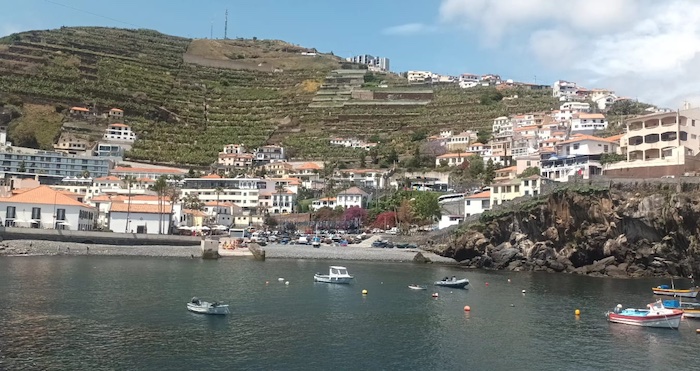
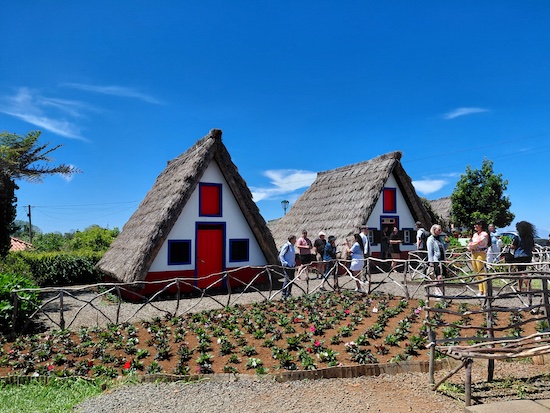
Ma Madeira non è solo Funchal. Bastano pochi chilometri lungo strade che si avvitano tra mare e montagna per scoprire un’isola fatta di villaggi, ciascuno con la sua identità testarda. A Santana, sul versante nord, si incontrano le casas de colmo: minuscole case triangolari dal tetto di paglia che scende fino a terra, dipinte di rosso, bianco e blu, un tempo abitazioni contadine e oggi cartolina vivente della Madeira più antica. A ovest, aggrappato a una baia, c’è Câmara de Lobos: un villaggio di pescatori il cui nome — «camera dei lupi marini» — ricorda le foche monache che un tempo lo popolavano. Fu qui che, negli anni Cinquanta, Winston Churchill venne a piantare il suo cavalletto: la luce sull’acqua e le barche colorate tirate in secca lo conquistarono, e i suoi dipinti resero celebre questo angolo di mondo.

Per capire questi villaggi bisogna risalire alle origini, perché la storia di Madeira, come molte belle storie, comincia con una tempesta. Nel 1419 il navigatore portoghese João Gonçalves Zarco, salpato sotto il patrocinio dell’Infante Enrico il Navigatore verso le coste africane, fu spinto fuori rotta da una burrasca e trovò riparo su una piccola isola che chiamò Porto Santo, «porto sacro», in segno di gratitudine. L’anno dopo, all’orizzonte, comparve la sua vicina, fasciata da una foresta così fitta e scura da meritarsi il nome di Madeira: «legno». La colonizzazione cominciò nel 1420 con famiglie venute dall’Algarve e alcuni prigionieri. Per strappare alla foresta i terreni da coltivare, i coloni le diedero fuoco; e la tradizione racconta di un incendio che bruciò per sette anni. Sulla cenere e sul suolo vulcanico, sotto un cielo mite tutto l’anno, attecchirono prima il grano, poi la canna da zucchero – allora rara e preziosa come una spezia – e infine il vino, destinato a diventare famoso in mezzo mondo. Nel 1508 Funchal fu elevata al rango di città dal re Manuele I.

Dietro questa prosperità si nasconde una fatica immane. Furono in gran parte gli schiavi a terrazzare i pendii verticali su cui crescono ancora le viti, e a scavare le levadas, gli oltre mille chilometri di canali che ancora oggi attraversano l’isola. Per secoli Madeira restò un mondo di villaggi montani isolatissimi, spesso privi di strade, raggiungibili solo a piedi dopo giorni di cammino. La svolta arrivò quasi ieri: a partire dalla fine degli anni Settanta, con l’autonomia regionale conquistata dopo la rivoluzione dei garofani, e soprattutto dal 1985, quando l’ingresso del Portogallo nella Comunità Europea portò i fondi che permisero di raddoppiare la rete stradale e di scavare centinaia di gallerie nelle montagne. Tragitti che richiedevano otto ore si ridussero a una o due. In pochi decenni l’isola passò dall’essere una delle regioni più povere del Portogallo a una delle più ricche, e il turismo — oggi oltre un milione di visitatori l’anno — scalzò l’agricoltura dal trono dell’economia. L’aeroporto sospeso sul mare è l’ultimo capitolo di questa stessa, ostinata volontà di vincere la geografia.
E poi c’è la geografia, che a Madeira diventa quasi poesia. L’isola viene spesso venduta come terra di sole, ma il suo vero incantesimo è fatto d’acqua. La chiamano l’isola dell’eterna primavera, e il segreto sta in un ciclo perfetto: l’oceano evapora di continuo, il vapore incontra i rilievi e viene spinto verso l’alto formando nubi che si scaricano sulle vette. Senza questo respiro l’isola sarebbe un deserto in mezzo al mare. A trattenere e a restituire quell’umidità provvede la Laurisilva, l’antichissima foresta di alloro dichiarata patrimonio dell’Unesco: con un’umidità interna che supera l’ottantacinque per cento, è una spugna verde che cola acqua da ogni centimetro e, insieme, un libro di storia naturale che mostra come appariva il Mediterraneo milioni di anni fa, prima delle glaciazioni.
Quella foresta è anche uno scrigno di biodiversità. Isolata in mezzo all’oceano, Madeira ha evoluto specie che non esistono in nessun altro luogo del pianeta: alberi, felci e fiori endemici, uccelli rari come il piccione trocaz, una ricchezza vegetale che fa dell’isola un vero giardino atlantico, dove convivono la flora subtropicale dei parchi di Funchal e l’alloro primordiale delle quote alte. Salendo, il paesaggio cambia ancora: alle vette più alte – il Pico Ruivo e il Pico do Arieiro, oltre i milleottocento metri – si cammina spesso sopra le nuvole, su sentieri che corrono lungo creste affilate, mentre la nebbia sale e scende come un sipario, scoprendo e nascondendo i precipizi. Verso est, la penisola di São Lourenço offre l’esatto contrario: roccia nuda, gialla e ocra, sferzata dal vento, un dito di terra arida proteso nell’Atlantico. È in questo gioco di contrasti – il verde e la pietra, la nebbia e il sole – che si nasconde la vera anima dell’isola.
Il Centro de São José, motore e anima
Se c’è un filo che tiene insieme tutto questo – le aule, le passeggiate per la città, le escursioni fino a Santana e Câmara de Lobos – quel filo ha un nome: il Centro Cultural e Desportivo de São José. È stato il centro portoghese, padrone di casa, a fare da motore e anima dell’intera settimana, con un lavoro appassionato, competente e generoso che andava ben oltre l’organizzazione di un convegno. A guidarlo sono due donne: la presidente Barbara Benedito e la sua vice Sofia Freitas.

Sono state loro ad accompagnarci nelle visite che hanno scandito le giornate: le chiese del centro, i borghi che sedussero Churchill, il museo che custodisce la storia dell’isola. Ma più di ogni monumento, a restare impressa è stata l’ospitalità. A Madeira il calore non è solo una formula di cortesia ma è un modo di stare al mondo. Ci hanno accolti come si accoglie chi torna a casa, e in quell’accoglienza c’era già, in fondo, la lezione del progetto – che imparare, a ogni età, è prima di tutto un fatto di relazioni.
Il prossimo passo sarà ricevere nella capitale italiana i partner polacchi e portoghesi, per l’ultima tappa di un cammino che proseguirà fino al 2027. Ma una parte di questo viaggio resta già incisa nella memoria: l’isola che si raggiunge solo planando sopra il mare, sospesi tra montagne e oceano, ci ha insegnato che la cosa più difficile – atterrare, ricominciare, imparare qualcosa di nuovo a ogni età – è anche quella che ripaga di più.
Sebastiano Catte*, com.unica 25 giugno 2026
*Ha collaborato Ilaria Pisciottani, autrice delle foto
ENGLISH VERSION
Madeira, the Island’s Lesson
A dispatch from the Portuguese island at the heart of an Erasmus+ project «Enhancing Cognitive Skills and Social Well-Being through English Learning for Seniors»
Landing on the Sea
There is a moment, just before the descent onto Madeira, when the aircraft seems to hold its breath. At a certain point there is no longer any land beneath the wing, only the ocean, and the runway appears all at once like a shelf suspended in mid-air: a ribbon of asphalt that does not rest on the island but reaches out over the Atlantic, held up by a hundred and eighty concrete piers as tall as a twenty-storey building. Most first-time arrivals do not yet know it, but they are about to experience one of the most famous and feared approaches on the planet.
The reasons for that reputation pile up like strata of volcanic rock. The first is the wind. The island sits planted in the middle of the Atlantic, five hundred kilometres north-west of Morocco, geographically closer to Africa than to the Portugal it belongs to; and the ocean currents strike it without meeting any obstacle. The second reason is the mountains: Madeira is a volcanic ridge that rises steeply out of the water, and when the ocean air slams against those walls it curls into unpredictable turbulence, crosswinds that change direction within seconds. The third reason is the runway itself. Originally it measured barely sixteen hundred metres; in 2000 it was extended to almost two thousand eight hundred by building, where the coast ran out, a viaduct reaching over the sea – a feat of engineering so daring it earned an international award for outstanding structures. Only specially trained pilots are allowed to land here; and even today a gust can force them to climb again and come back round, while passengers grip the armrests and a few, they say, rediscover their faith in ninety seconds.
And then there is the name. Since 2017 the airport has been called Cristiano Ronaldo International Airport, dedicated to the island’s most famous son, the man who put Madeira on the map for people who had never thought to look for it. It is one of those details that say a great deal about a place: the champion who grew up in a poor neighbourhood of Funchal has never severed the bond with his homeland. His generosity is made above all of gestures directed at health and childhood – funds for the oncology centre that treated his mother, hospital wards and medical equipment, his work as an ambassador for organisations devoted to children around the world. So the island that opens under the banner of football reveals itself, right from the airport sign, as a place where individual success returns in the form of collective care. A good omen, one is tempted to think, for someone arriving precisely to talk about people’s wellbeing.
Funchal, the Amphitheatre on the Ocean
Funchal, the capital where roughly a third of the island lives, has the shape of a natural amphitheatre: it climbs the hills up from the harbour, and its brick-roofed houses look like tiers arranged around the stage of the ocean. Seen this way, from above, it is a vertical city — which is why a cable car sets off from the port area to carry up those who would rather not tackle the climbing alleys; as you ascend, the gardens and cobbled lanes of the centre gradually give way to steep ramps that scramble towards the mountain. Down below, along the sea, cruise ships dock where the great ocean liners once called; the pavements are laid in black and white basalt, and the architecture has the slightly absent-minded elegance of seaside towns that have watched many stories pass through.
It is a city with a habit of changing trade without throwing anything away. The fortifications raised against pirates have become museums; the old wicker toboggans, once a practical means of carrying farm produce down to the valley, are today a tourist descent that makes you laugh and tremble a little. Even melancholy has left its mark. In the nineteenth century Funchal was a renowned health resort: the island’s pure air was believed to cure certain illnesses, and a procession of European nobles came to breathe it. Among them was the Empress Elisabeth of Austria, the celebrated Sissi, to whom the city has dedicated a statue. Higher up, in the sanctuary of Nossa Senhora do Monte, lies the last emperor of Austria-Hungary, Charles I, exiled here after the Great War and dead of pneumonia in 1922 in reduced circumstances: beatified in 2004, his tomb is still a place of pilgrimage from every corner of the world. And yet this city of exiles and convalescents is also capable of dazzling joy: its New Year’s fireworks, which light up the harbour through a full three hundred and sixty degrees, have entered the Guinness Book of Records as one of the largest on the planet.
The Lesson: Learning Has No Age
But the reason for this journey was not the scenery. Right here, in the heart of Funchal, we lived through one of those experiences that stay with you. As members of the Fondazione Giuseppe Levi Pelloni of Rome, we took part in the second meeting of the European project «Enhancing Cognitive Skills and Social Well-Being through English Learning for Seniors» – strengthening the cognitive abilities and social wellbeing of older people through the learning of English – funded by the European Union under Erasmus+. The initiative weaves together three countries and as many organisations: the Polish Fundacja EDUNET of Rzeszów, the project’s lead partner, headed by Tomasz Stadnik; the Fondazione Giuseppe Levi Pelloni for Italy; and the Portuguese Centro Cultural e Desportivo de São José, the host. In Madeira the close-knit Italian team was led by its president, Pino Pelloni, and included vice-president Paola Sonnino, the author of this text (who is in charge of the website and the Italian section of the e-book project), Ilaria Pisciottani (who took the photographs that illustrate this piece), the polyglot interpreter Ute Geremias and Eleonora Rosati.
The meeting took place in the classrooms of the Portuguese centre, as guests of the São José association, and for a few days English stopped being a subject and became a team sport. The older participants worked with active-learning methods: exercises to loosen tongue and shyness at once, digital materials, language games, little sketches to act out and, above all, activities built around the culture and traditions of the three countries. The backbone of it all was the e-book created by the project, a kind of shared atlas gathering the geography, history, customs and cultural heritage of Poland, Italy and Madeira: a book that grows as you use it, and one meant to remain even once the suitcases are unpacked.
The liveliest part, though, lay not in the materials but in the people. All week the three associations — the Polish, the Italian and the Portuguese — worked side by side, and around the centre’s tables the differences of language dissolved into gestures, laughter and a surprising ease in understanding one another. The older people, who elsewhere might have been reduced to being “looked after”, were here the true protagonists: each brought their own story, their own country, their own age, and it was precisely in mixing them that learning was born.
What gave all this its institutional depth was the meeting with Dr Pedro Araújo, president of the Junta de Freguesia do Imaculado Coração de Maria, the parish that hosts the centre. Araújo described the initiatives through which the local administration cares for its older citizens: social programmes designed to counter loneliness and exclusion, two silent enemies that old age knows all too well. It is the same conviction that drives the European project: that learning, being together, feeling part of a community are not luxuries but medicines. And the e-book, in this sense, is more than a manual: it is proof that a network of distant cities can build something that lasts.
The Capital Up Close: Stone, Faith and the Future
Guided by our hosts, we came to know Funchal up close as well, one stone at a time. You begin where the city is most alive: the Mercado dos Lavradores, the covered market where in the morning a light breeze drifts in through the doors and colour explodes on every stall. There is pink-and-gold pitaya, the pineapple-banana, the pitanga, the cherimoya, and there are proteas as large as sculptures; the air smells of fresh ocean, of flowers and of citrus.
A short distance away rises the Cathedral – the Sé, from the Latin for “episcopal seat” — built between 1493 and 1514 at the behest of Manuel I. It was one of the first great churches raised in Portugal’s overseas territories, and it remains one of the few in the Manueline style — Portuguese late Gothic – to have come down to us almost intact. From the outside it is sober, almost austere, with its dark stone portal and its tower clad in glazed tiles; but it is inside that it reveals its secret. The ceiling is its masterpiece: an inlay of local wood — the island’s cedar — worked in the Mudéjar style and enriched with insets of ivory, hung above the nave like an upturned sky. All around, the gold of the altars kindles the half-light. To raise your eyes towards those vaults is to feel, for a moment, small before history: five centuries of prayers, of shipwrecks and of homecomings have gathered beneath that dark wood, in a city that has always lived facing the sea.
A few steps on, history changes trade once more, and here we are at the church of São João Evangelista which, together with the adjoining Jesuit College, tells perhaps the most surprising chapter of this continuity. The Jesuits arrived in Funchal in the sixteenth century and founded here, in 1569, a college destined to become for centuries the intellectual heart of the island: they taught grammar, theology and the sciences, formed generations of Madeirans and left a deep mark on local culture, before the order was expelled in 1759. The college church, with its Baroque altars sheathed in gold and azulejos, remains one of the richest interiors in the city. But it is the ending that strikes one most. That building, used over the centuries as a school, a barracks and a military headquarters, now houses the rectorate of the University of Madeira — officially founded only in 1988, yet rooted in a place where teaching has gone on since the sixteenth century, and today able to forge alliances with cutting-edge universities for research into artificial intelligence. From the Jesuits who taught Latin to the algorithms that learn by themselves: it is the portrait of an island that, rather than demolishing its own past, chooses every time to build upon it.
Beyond the Capital: The Island and Its Roots
But Madeira is not only Funchal. A few kilometres along roads that coil between sea and mountain are enough to uncover an island made of villages, each with its own stubborn identity. At Santana, on the northern slope, you come across the casas de colmo: tiny triangular houses with thatched roofs sweeping down to the ground, painted red, white and blue, once peasant dwellings and today a living postcard of the oldest Madeira. To the west, clinging to a bay, is Câmara de Lobos: a fishing village whose name — “chamber of the sea wolves” – recalls the monk seals that once colonised it. It was here, in the 1950s, that Winston Churchill came to set up his easel: the light on the water and the brightly coloured boats hauled up on the shore won him over, and his paintings made this corner of the world famous.
To understand these villages you have to go back to the beginning, for the story of Madeira, like many fine stories, begins with a storm. In 1419 the Portuguese navigator João Gonçalves Zarco, who had set sail under the patronage of Prince Henry the Navigator towards the African coast, was driven off course by a gale and found shelter on a small island he named Porto Santo, “holy harbour”, in gratitude. The following year its neighbour appeared on the horizon, wrapped in a forest so dense and dark that it earned the name Madeira: “wood”. Colonisation began in 1420 with families from the Algarve and a number of convicts. To wrest farmland from the forest, the settlers set it alight; and tradition tells of a fire that burned for seven years. On the ash and the volcanic soil, under a sky mild all year round, first wheat took root, then sugar cane — at the time as rare and precious as a spice — and finally wine, destined to become famous across half the world. In 1508 Funchal was raised to the rank of city by King Manuel I.
Behind this prosperity lies an immense labour. It was largely slaves who terraced the vertical slopes where the vines still grow, and who dug the levadas, the more than a thousand kilometres of channels that still cross the island today. For centuries Madeira remained a world of utterly isolated mountain villages, often without roads, reachable only on foot after days of walking. The turning point came only recently: from the late 1970s, with the regional autonomy won after the Carnation Revolution, and above all from 1985, when Portugal’s entry into the European Community brought the funds that made it possible to double the road network and bore hundreds of tunnels through the mountains. Journeys that had taken eight hours shrank to one or two. Within a few decades the island went from being one of the poorest regions of Portugal to one of the richest, and tourism — today more than a million visitors a year — knocked agriculture off its throne at the head of the economy. The airport suspended over the sea is the latest chapter of this same stubborn determination to defeat geography.
And then there is the geography, which on Madeira turns almost to poetry. The island is often sold as a land of sun, but its real magic is made of water. They call it the island of eternal spring, and the secret lies in a perfect cycle: the ocean evaporates without pause, the vapour meets the high ground and is pushed upward, forming clouds that release their rain on the peaks. Without this breathing the island would be a desert in the middle of the sea. It is the Laurisilva that holds and gives back that moisture — the ancient laurel forest declared a UNESCO World Heritage Site: with an internal humidity above eighty-five per cent, it is a green sponge dripping water from every centimetre and, at the same time, a book of natural history showing how the Mediterranean looked millions of years ago, before the ice ages.
That forest is also a treasure chest of biodiversity. Isolated in the middle of the ocean, Madeira has evolved species found nowhere else on the planet: endemic trees, ferns and flowers, rare birds such as the trocaz pigeon, a botanical wealth that makes the island a true Atlantic garden, where the subtropical flora of Funchal’s parks lives alongside the primeval laurel of the heights. As you climb, the landscape changes again: at the highest peaks – Pico Ruivo and Pico do Arieiro, above eighteen hundred metres – you often walk above the clouds, along paths that run over knife-edge ridges, while the mist rises and falls like a curtain, revealing and hiding the precipices. To the east, the São Lourenço peninsula offers the exact opposite: bare rock, yellow and ochre, lashed by the wind, a finger of arid land reaching out into the Atlantic. It is in this play of contrasts — the green and the stone, the mist and the sun — that the island’s true soul lies hidden.
The Centro de São José, Engine and Soul
If there is a thread that holds all this together – the classrooms, the walks through the city, the excursions out to Santana and Câmara de Lobos – that thread has a name: the Centro Cultural e Desportivo de São José. It was the Portuguese centre, as host, that served as the engine and soul of the whole week, with work so passionate, competent and generous that it went well beyond the running of a conference. It is led by two women, the true engine and soul of the project on the Portuguese side: its president, Barbara Benedito, and her deputy, Sofia Freitas.
It was they who accompanied us on the visits that punctuated our days: the churches of the centre, the villages that seduced Churchill, the museum that guards the island’s history. But more than any monument, what stayed with us was the hospitality. On Madeira, warmth is not a formula of courtesy: it is a way of being in the world. They welcomed us as one welcomes someone coming home, and in that welcome there was already, at heart, the lesson of the project – that learning, at any age, is first of all a matter of relationships.
The next step will be to receive the Portuguese and Polish partners in the Italian capital, for the final leg of a journey that will continue until 2027. But part of this trip is already etched in memory: the island you can reach only by gliding in over the sea, suspended between mountains and ocean, has taught us that the hardest thing — landing, starting over, learning something new at any age — is also the thing that rewards you most.